
A few weeks ago, I got a bee in my bonnet about clearing out my house. It was starting to feel like too much, almost claustrophobic, and I couldn’t focus on the things I actually needed to focus on. So I leaned into it. Back in 2016, at my previous house, I did something similar after reading The Life-Changing Magic of Tidying Up, and ended up donating no less than ten garbage bags to Goodwill. This time around, I decided to put more effort into Facebook Marketplace instead. Within one week I’d made $1,500, and along the way I picked up a handful of facebook marketplace listing tips that make the difference between something that sells in a day and something that sits there collecting messages that go nowhere. Today I’m sharing the little things that I think made all the difference.
The Facebook Marketplace Listing Tip That Matters Most: Your Photo
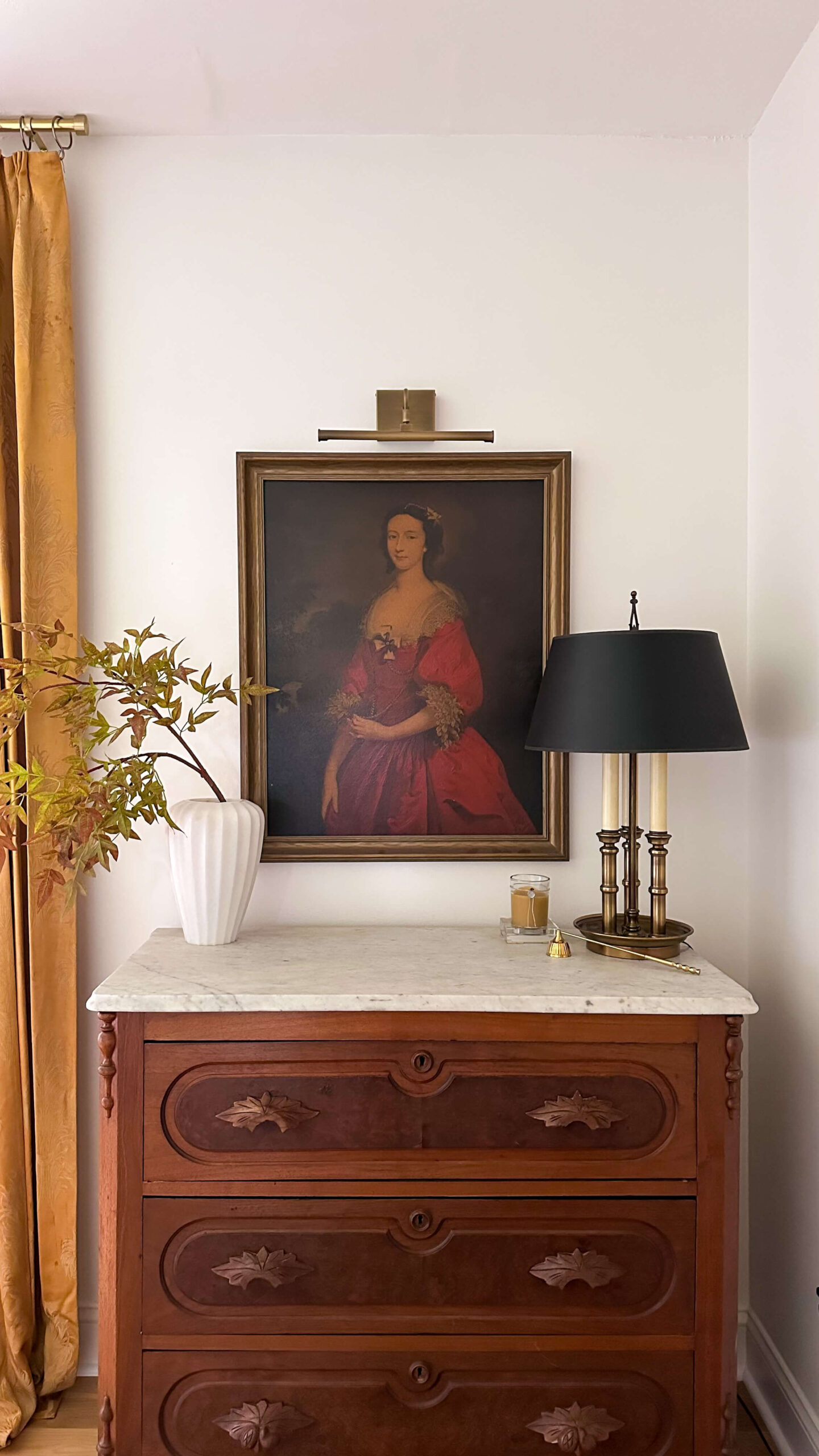
I know the item in front of you might feel like trash at this point. You’ve made peace with it, you just want it gone, and the last thing you want to do is stage a photoshoot for a lamp you’ve hated since 2019. But a genuinely thoughtful photo is the single biggest lever you have for getting your listing pushed out to more people.

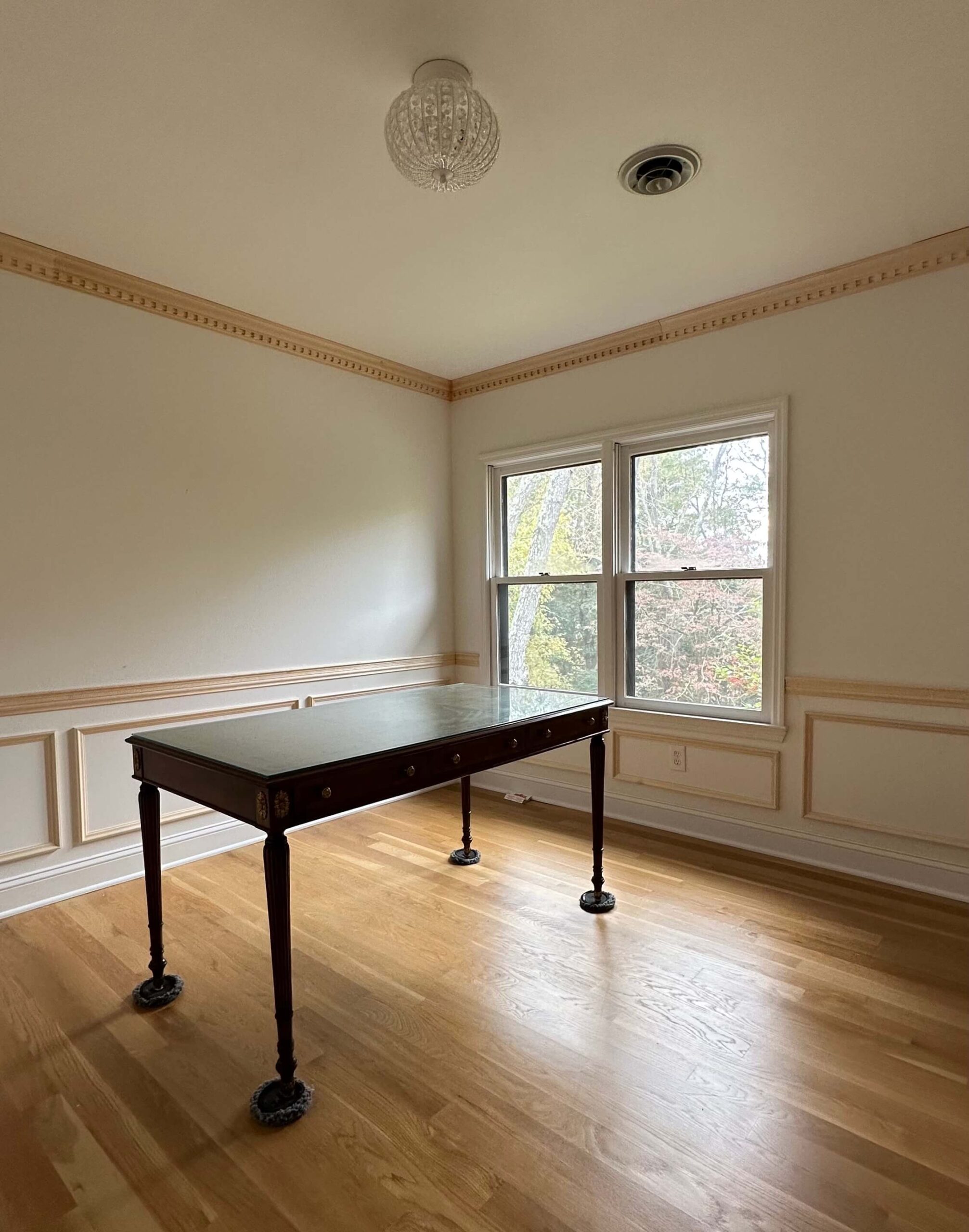
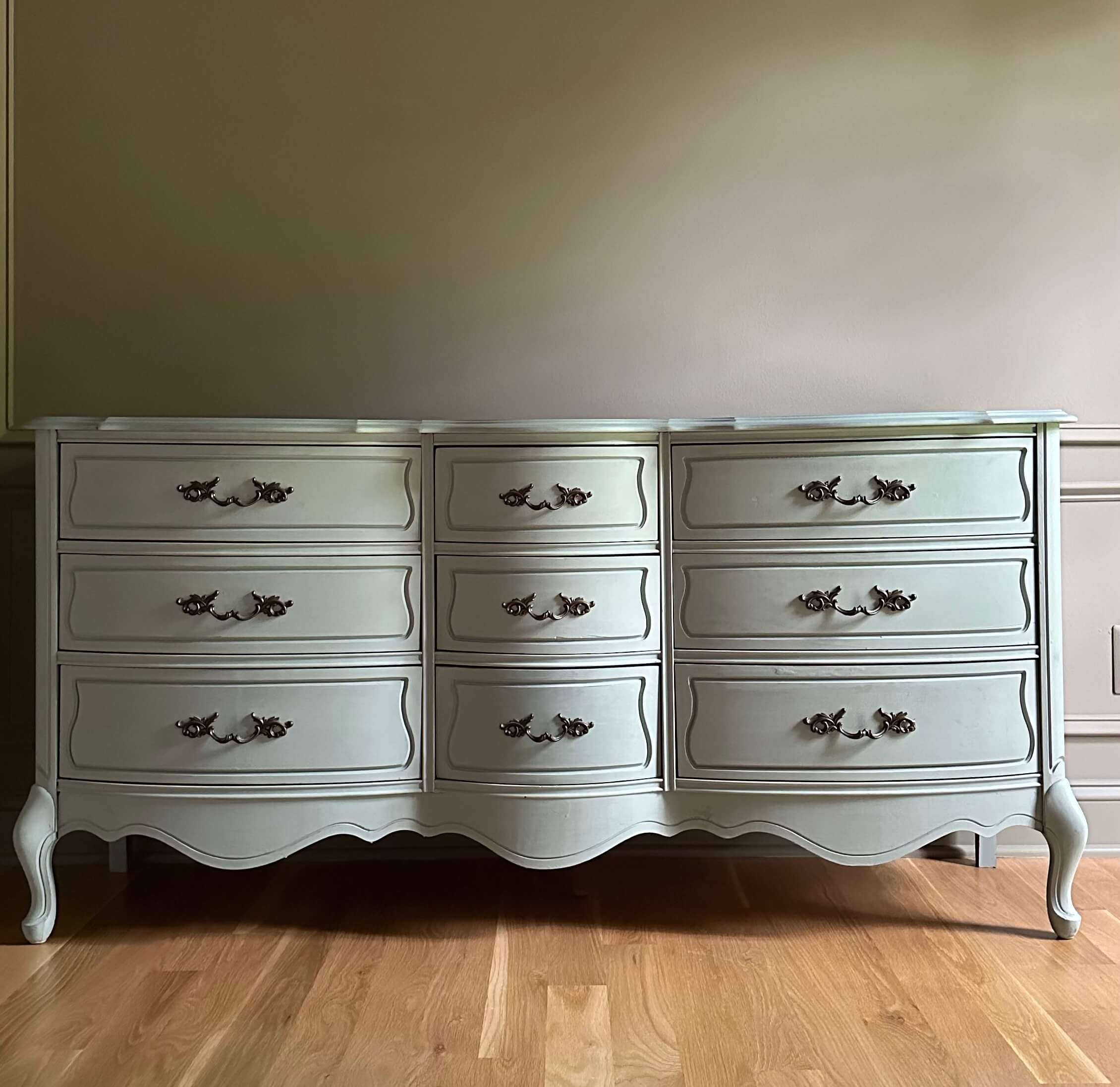
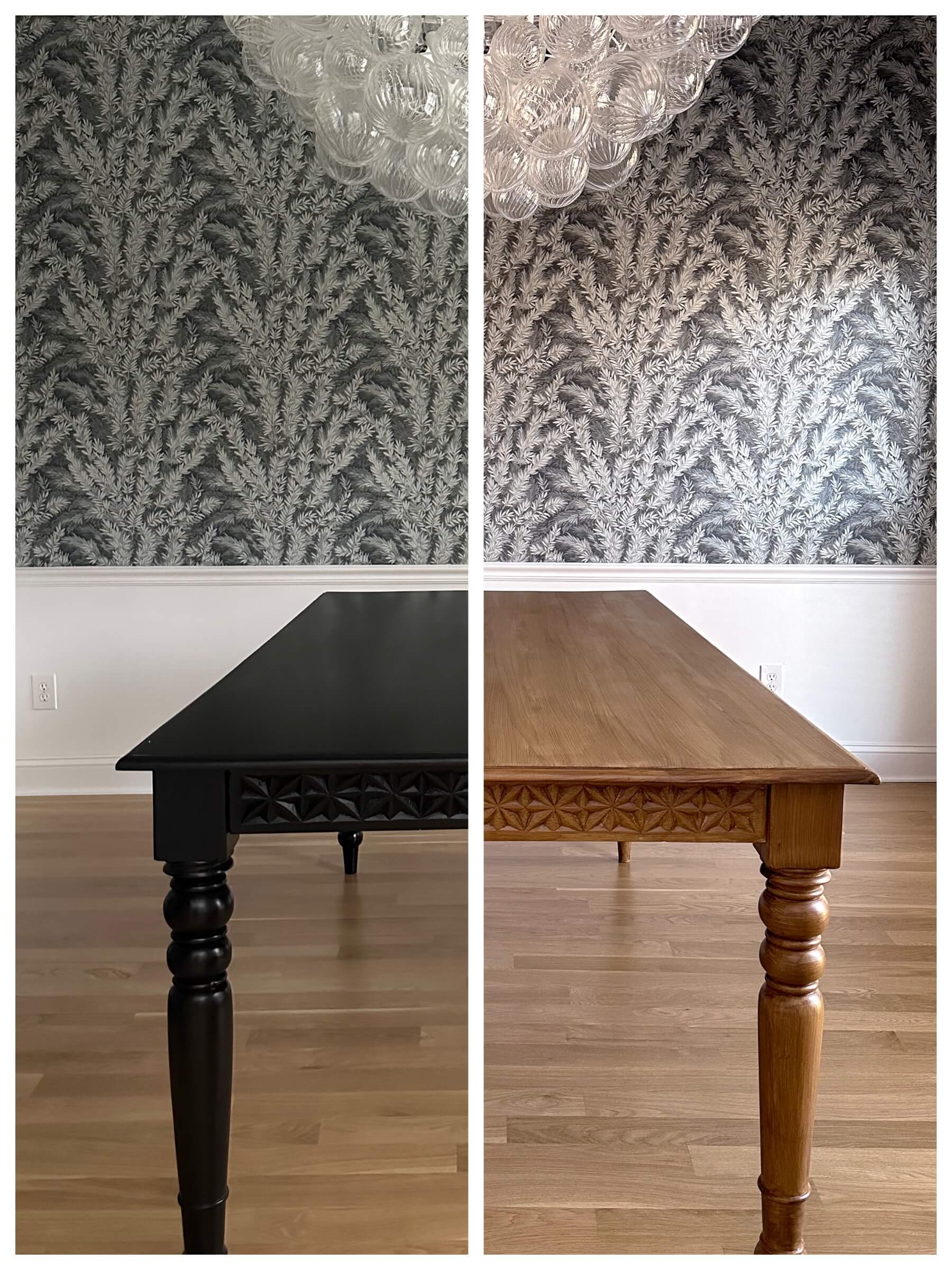
This styled console table sold instantly without negotiation. Shop: Console Table | Wallpaper | Rechargeable Wireless Lamp
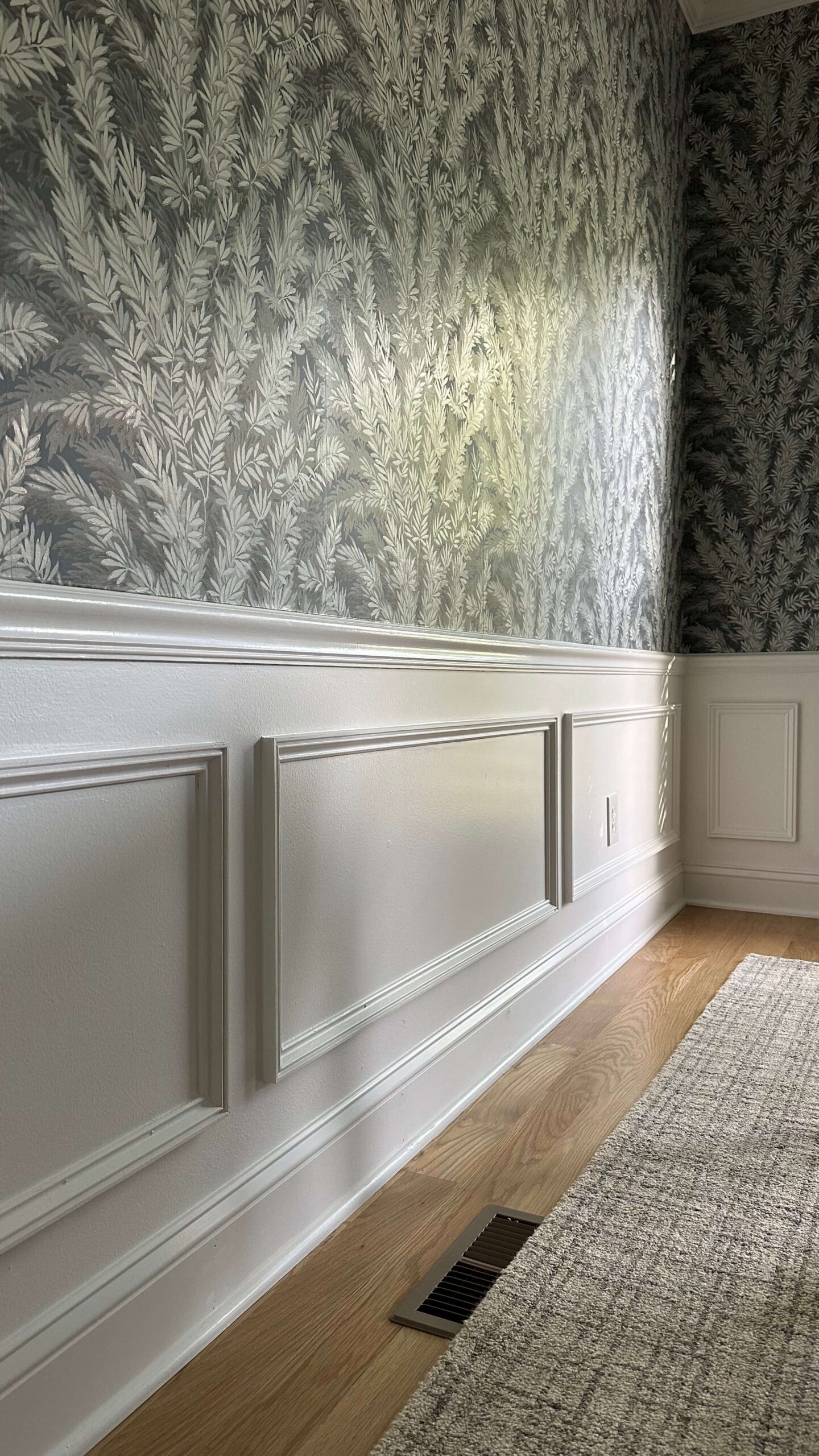
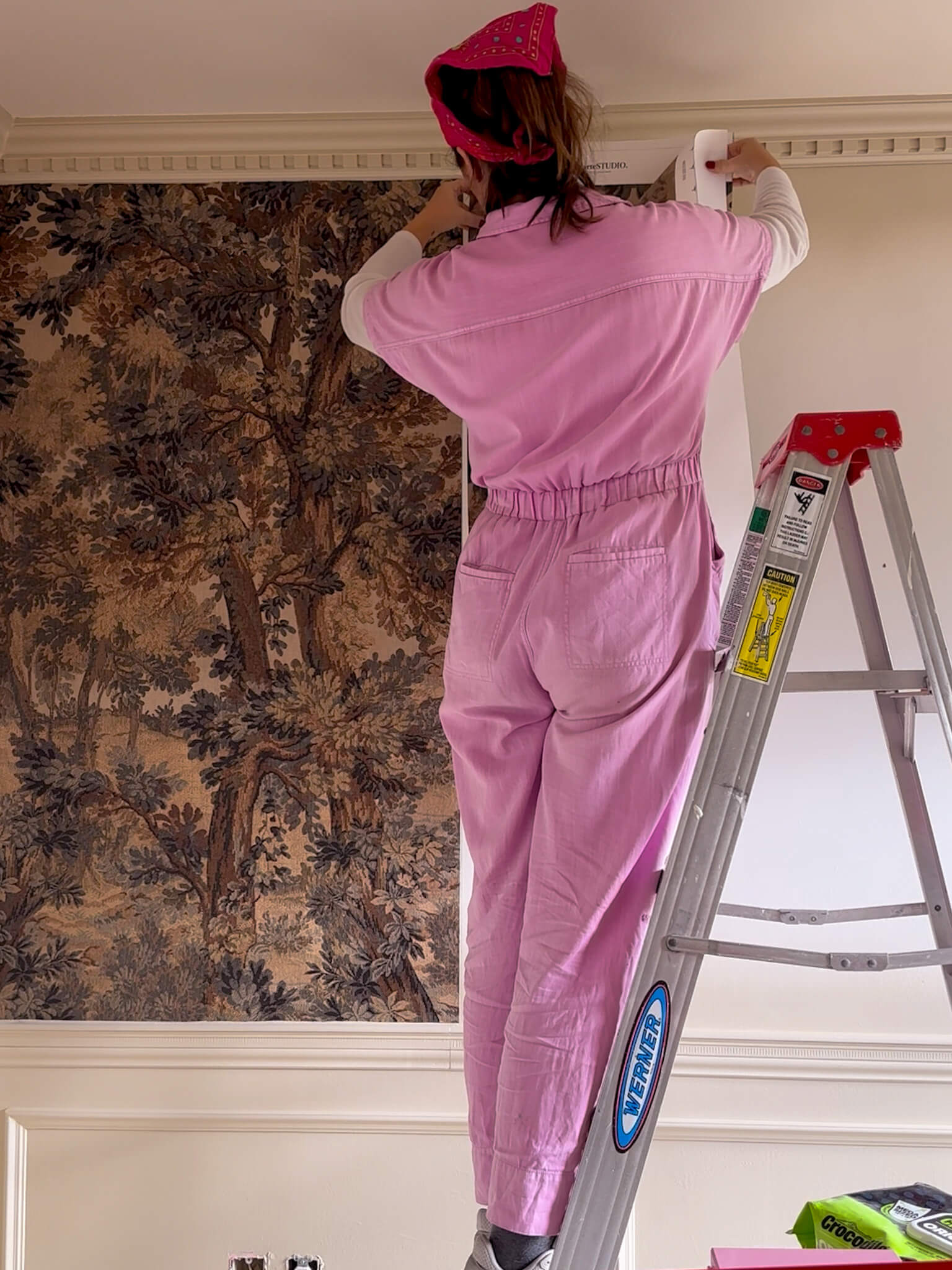
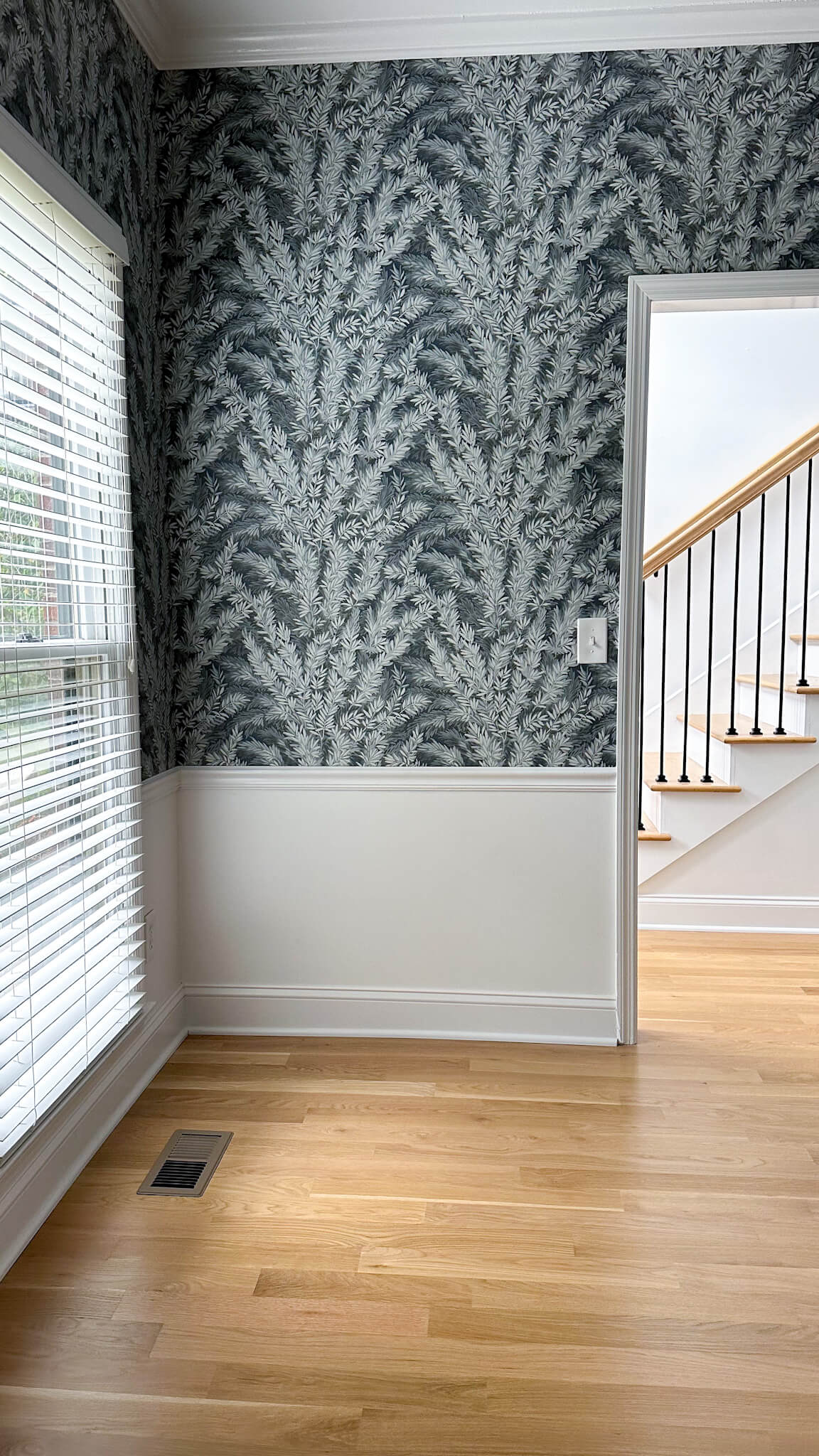
Set the item somewhere with good natural light, clear the background, and style it a little if the item allows for it. I have wallpaper in my dining room that people compliment constantly, so when I’m selling something small like a vase or a bundle of faux stems, I’ll place it right in front of that wall instead of on my kitchen counter. It sounds like a small thing, but it consistently gets more eyes and more clicks than a flat, uninspired photo ever does.
Try a Google Reverse Image Search Before You Snap Your Own Photos
If you bought the item online, or even if you didn’t, open the Google app, point your camera at the piece, and it will often pull up the original manufacturer’s listing photos. This is called Google Lens and it can be your best shopping companion! I wrote a whole post about how I use it here.
If I can find the original listing photos online, I like to pull these into my own listing, sometimes as the lead photo, sometimes tucked in alongside my own shots. They’re professional, well lit, and they put the item in the best possible light without any extra effort on your part. This also might show you other listings and what they’re priced at, or lead you to the original product page where you can pull dimensions or other valuable information.
Get Specific With Your Title
Vague titles are where good items go to die in the algorithm. List exactly what the piece is, the size if it’s relevant, and the brand name if you know it. If I’m selling a vase from Crate & Barrel, I don’t write “vase,” I write “Modern Geometric Clay Vase from Crate & Barrel,” because that’s what someone is actually typing into the search bar. If you know the specific name of the piece, even better. That vase, for what it’s worth, was the Ophelia, and naming it that specifically probably helped it show up for the exact person who was already looking for it.
Don’t Skip the Dimensions
This one gets overlooked constantly, and it shouldn’t. Nearly everything you sell has dimensions, and your buyer is picturing that item in their own home before they ever message you. If someone’s shopping for a chair or a piece of art, they need to know it’ll actually fit where they want to put it. Take the extra few minutes to measure from every angle and put those numbers directly in the listing instead of waiting for someone to ask.
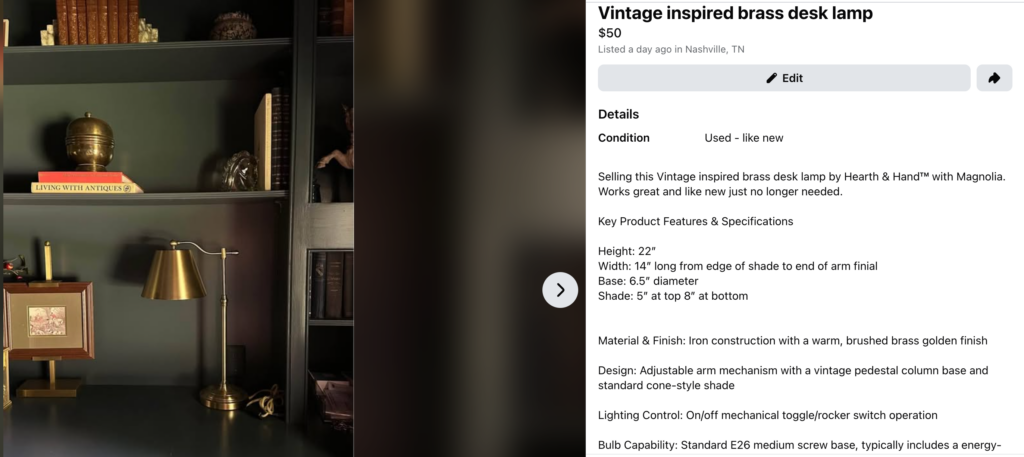
An example of a great listing description, copied from the original product page with dimensions added in.
Price With Your Location in Mind
Where you live changes what your item is worth on Marketplace, whether that feels fair or not. A city with a lot of demand can usually support a higher price point. A more rural area might see less competition for buyers, or sometimes more demand than you’d expect depending on what you’re selling. Before you set a number, take a minute to think about supply and demand in your specific area rather than pricing purely off what you paid.
Shipping can extend your reach well beyond your local area, but it comes at a cost. Facebook takes a cut, and someone has to pay for the label, whether that’s you or the buyer. If getting an item gone matters more to you than squeezing out every dollar, it’s worth offering. Otherwise, I usually stick to Venmo or cash and keep the whole exchange simple.
Let Your Analytics Guide the Negotiation
Once your listing is live, don’t just wait around, watch the numbers! If you’re seeing 500 or 600 views within the first week, that tells you there’s real interest, and it gives you room to hold firm on your price instead of caving to a lowball offer. If you’re only getting a couple of views, that’s useful information too. It usually means one of three things: the price is too high, the photo isn’t pulling its weight, or the title is missing the keyword a buyer would actually search.
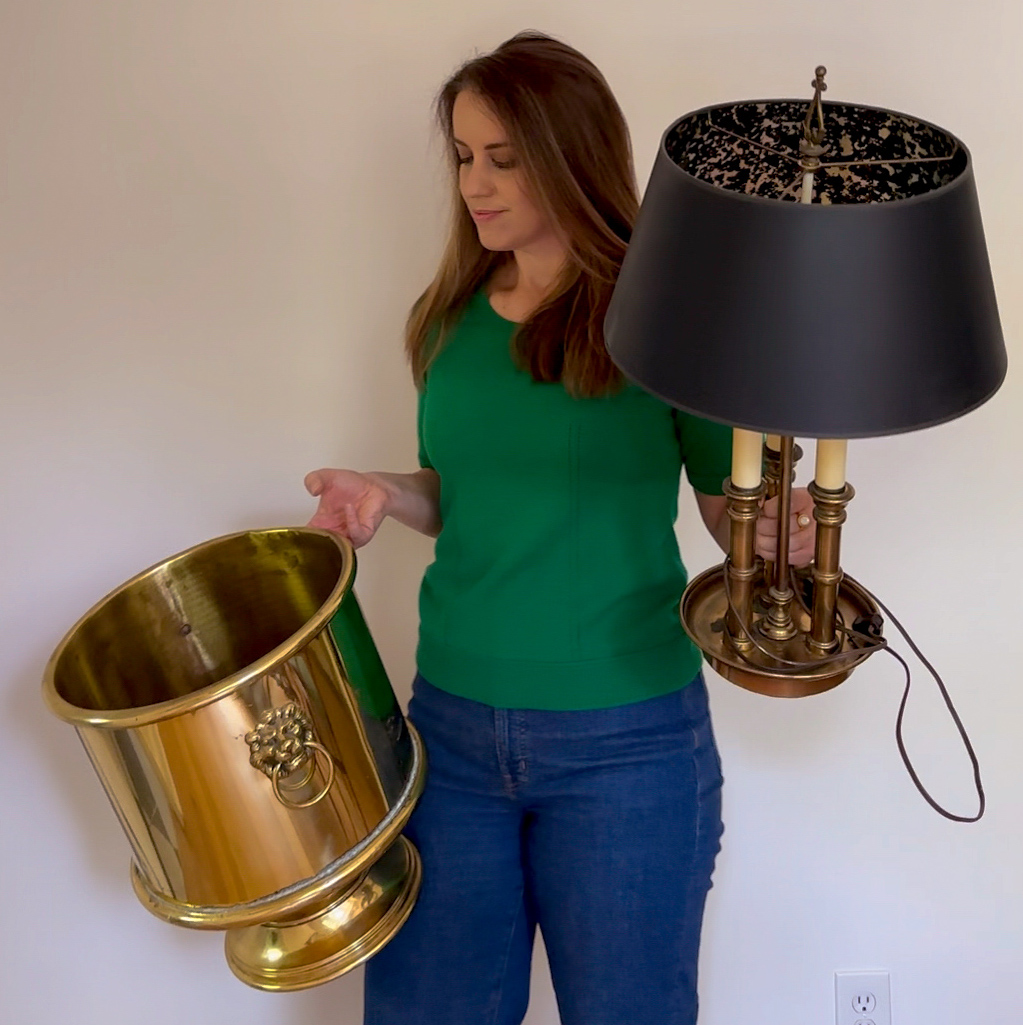
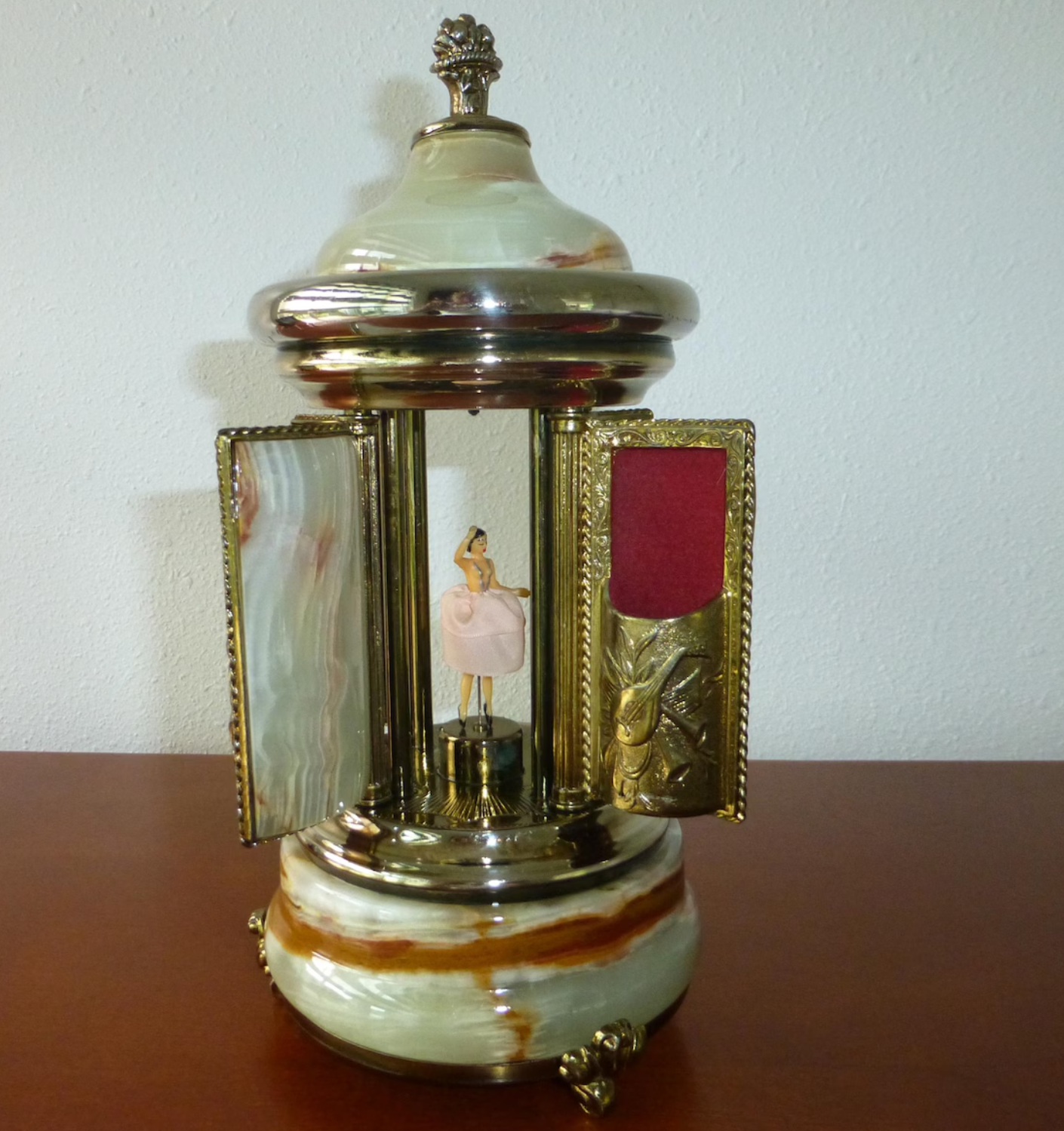
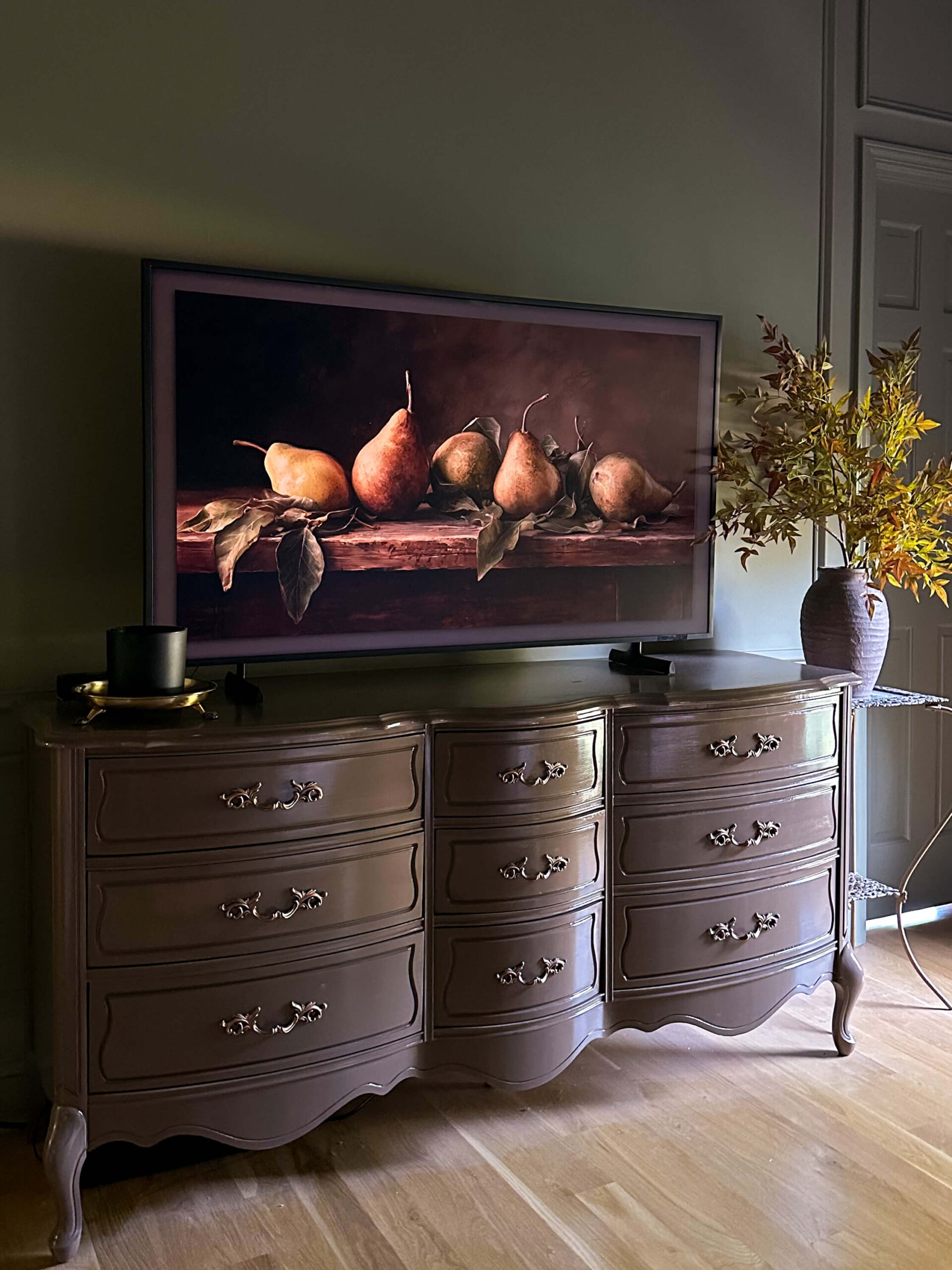
Antiques are a hot commodity in the Nashville area so the demand sets my pricing and how much I’ll negotiate.
Not every item deserves the same level of firmness. If it’s something big that I really want out of the house, I’ll bend a little on price just to get it moving. If it’s tucked away somewhere and not bothering me, and I already priced it fairly, I hold my ground. Neither approach is wrong. The key is deciding which one applies before the first insulting offer lands in your inbox, so you’re not making that call in the moment.
Break a Big Decluttering Project Into Small Pieces
If you’re staring down a long list of things to sell, the whole project can start to feel like too much before you even begin. I make a master list of everything I want gone, then chip away at it in small batches. Some days I’ll list ten things, other days just five. As soon as something goes live, I tuck it into the same designated closet, so when it sells, I’m not digging through the house trying to remember where I put it.
Final Thoughts on Selling Smarter, Not Harder
Taking a little extra time with your photos, your title, and your listing details is what separates a fast sale from an item that lingers for weeks. These are the facebook marketplace listing tips I come back to every single time I declutter, and they’re the reason a week of effort turned into $1,500 instead of a pile of stuff nobody noticed.
Related Posts:
Google Lens: Your Best Shopping Companion